

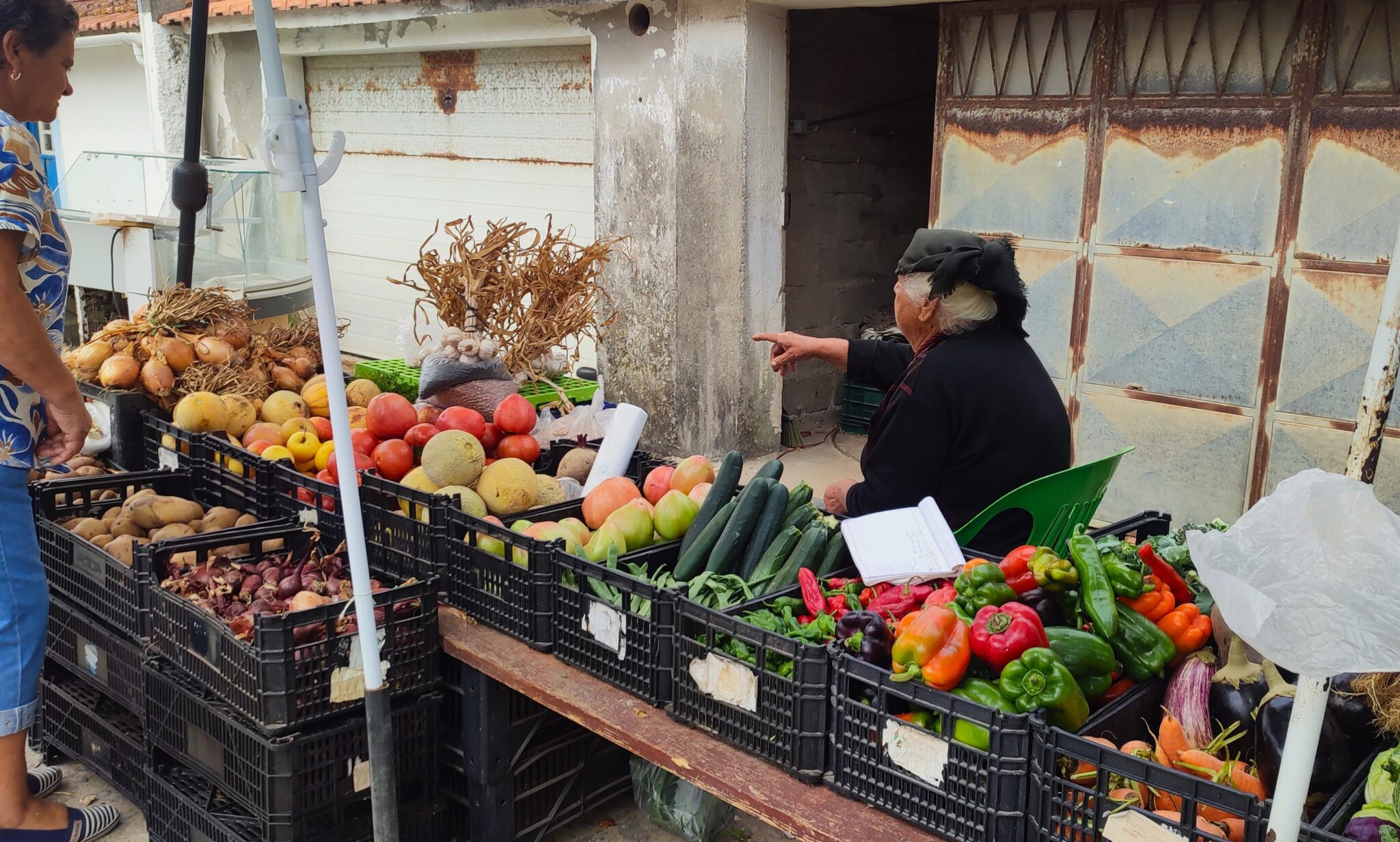
In a typical corner of Apulia, next to an old house with weathered walls and a rusty gate, a vegetable stand bursts with color and life. On the wooden table, black crates are lined up, filled with potatoes, onions, cucumbers, peppers, tomatoes, melons, and cabbages – all harvested with dedication and skill. Seated on a plastic chair, the vendor—wearing a dark headscarf and simple clothing – watches closely as people approach, pointing with a firm, experienced gesture, the result of many years of working the land. The setting is simple, yet it carries with it a wealth of flavors and stories, a symbol of the local communities’ resistance to the pressures of globalization. By keeping this tradition alive, the street stall preserves the authenticity of the products and human relationships, affirming Apulia’s rural identity at a time when everything seems to be moving toward standardization.
A bank on the fringes of sustainability
Seated on a green plastic chair, with a dark scarf covering her graying hair and weathered hands, the vendor watches closely as people approach her stall. Her serene yet resolute face reflects the experience of a life devoted to the land. Surrounded by plastic crates brimming with fresh vegetables and fruits, she keeps alive an essential tradition in the town of Apúlia. The setting is simple, but the vendor’s presence - a sturdy figure, dressed in black, a symbol of resilience - transforms the stall into a true bastion of the local economy, environmental sustainability, and the resistance of rural communities to the homogenization imposed by globalization.

You must be logged in to post a comment.