

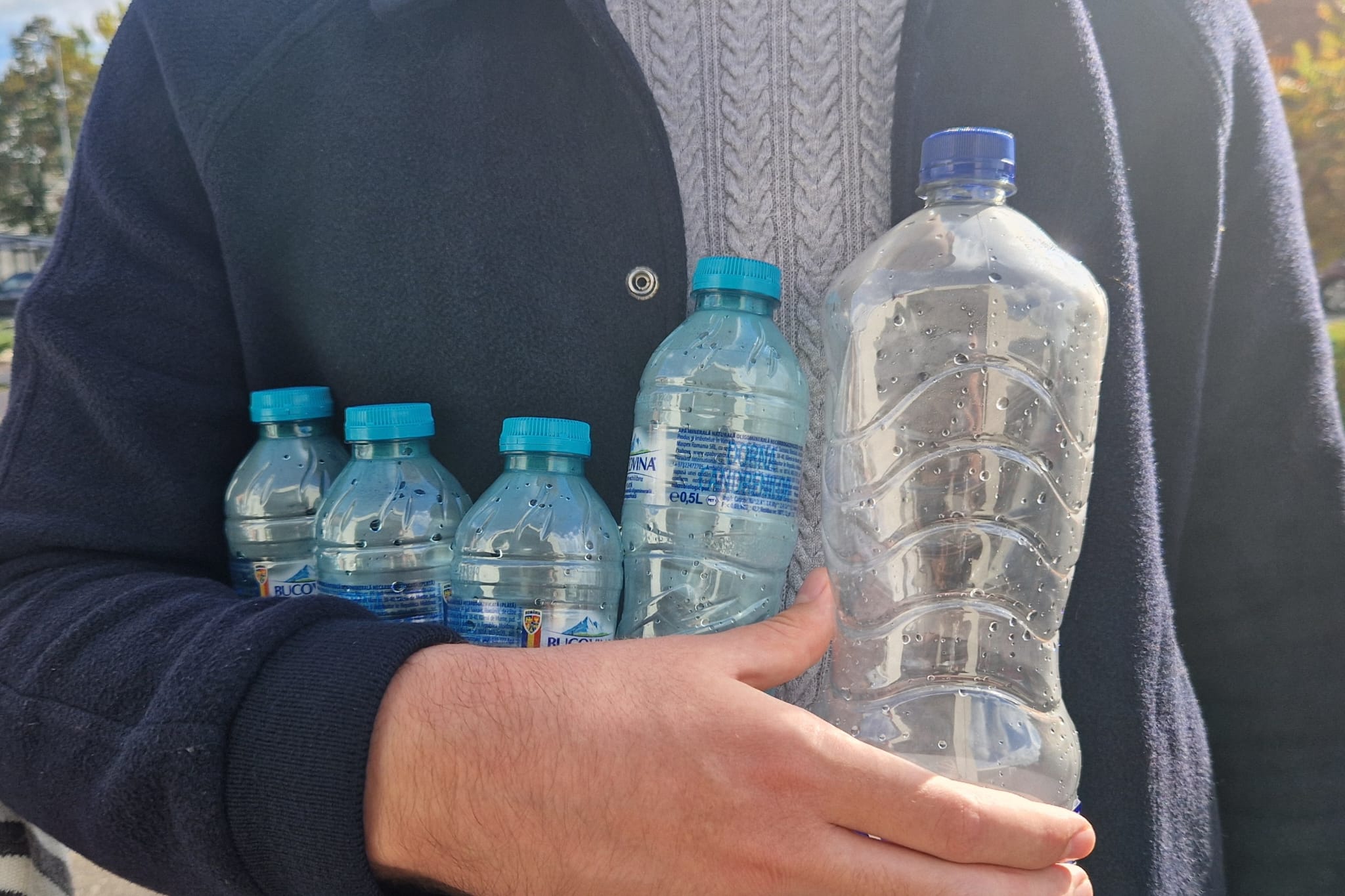
Romania was known for having one of the lowest recycling rates in the European Union until the launch of the Deposit Return System (DRS), which rapidly increased collection rates to 94% and profoundly changed consumer habits.
According to the European Environment Agency (2025), in 2022, the country had a landfill rate of 74%, creating a need to improve the population’s habits and expand recycling infrastructures, not only for packages, but also for municipal and bio-waste, allowing the transition from disposable to reusable, disencouraging the landfilling.
In 2023, Romania took a decisive step towards a circular economy, having adopted the Deposit Return System for single-use beverage containers. This system revolutionised Romanian recycling facilities, becoming the world’s largest centralised DRS in terms of container volume.
The consumers only need to follow a simple scheme: they pay a small deposit (0,50 RON) when purchasing a beverage and recover that same amount when returning the empty container at designated collection points. Thanks to its nationwide coverage and clear economic incentive, the scheme achieved rapid public acceptance, leading to higher collection rates and a noticeable reduction in littering.
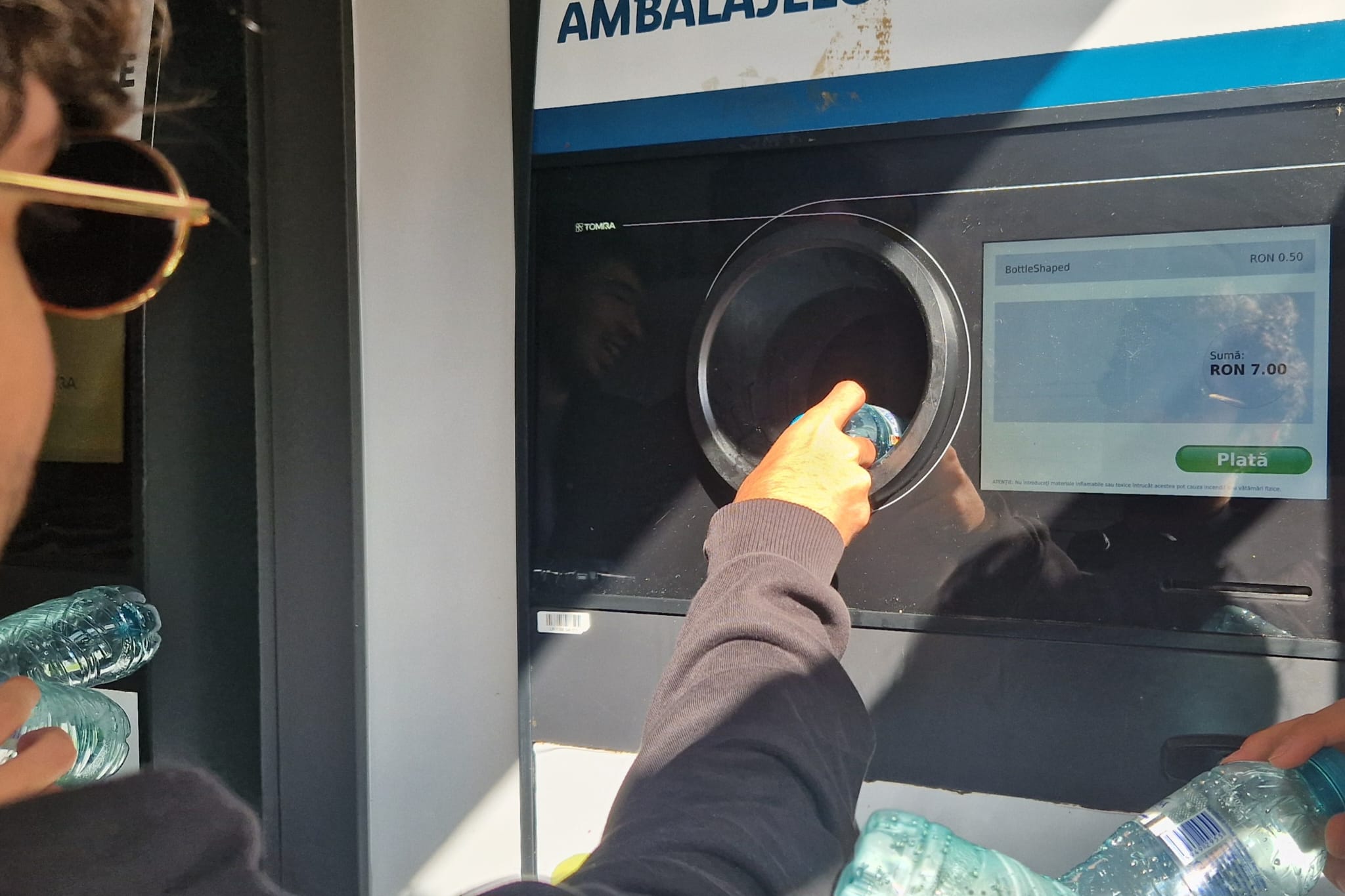
A person uses a Deposit Return System machine to return empty bottles, receiving a refund while contributing to recycling and environmental sustainability.
Nowadays, Romania’s success in the DRS is reflected in countries across all regions adopting Deposit Return Systems or preparing their implementation, recognising their effectiveness in improving recycling quality and meeting environmental targets. Portugal is expected to launch this system in April of 2026, having more than 8000 designated collection points to verify and deliver these containers, all over the country, exchanging for 0,10€ each. According to SDR Portugal, this measure is expected to avoid 109 thousand tons of CO2eq for incorporating better quality material in the production of new packages, reduce littering by 30/40% and promote the creation of 1500 jobs. If successfully implemented, the DRS could represent a turning point for Portugal towards a more sustainable future, by better managing waste and promoting recycling.

You must be logged in to post a comment.