

Ecos da Natureza is a project with 6 main participants that work part time and many paid volunteers that help as well. Developed in Oeiras the project aims to protect the environment through observation and necessary intervention of biodiversity in different areas like the coastals and meadows.
Similar to the ocean, lakes and rivers are full of biodiversity and Ecos da Natureza makes sure to protect them. More specifically, the “Ribeira da Lage”, it has five main species of fish, three of which are endangered: Squalius pyrenaicus (endangered), European eel (endangered), iberochondrostoma (endangered), Cobitis paludicola , Luciobarbus (threatened). In addition to that, the lake is full of amphibians (frogs), reptiles (snakes, lizards) and many micro organisms.
Observance and monitoring of species in a local environment are important actions, to be able to expand research and to protect the biodiversity is key to a sustainable environment. Keeping a record about the species and their habits helps biologists understand animals and how they are connected in an ecosystem. It can also help them to actively control biodiversity, by exploring the population’s trends and their causes.
Alongside monitoring they also do necessary intervention actions such as planting “Typha domingensis” and “Iris pseudacorus”.
Planting these water plants solves multiple issues that are mainly caused by invasive algae. Overgrowth of algae causes eutrophication, in result there is not enough oxygen for the fauna to properly survive. This created mass deaths of fish in these areas in the past. The flora they plant filter out unnecessary organic matter and enable oxygen in the river even when its night and photosynthesis is not possible. The plant also serves as a habitat, hiding and reproduction place for the endangered fish. These actions work hand in hand to make the river ecosystem self sustainable.
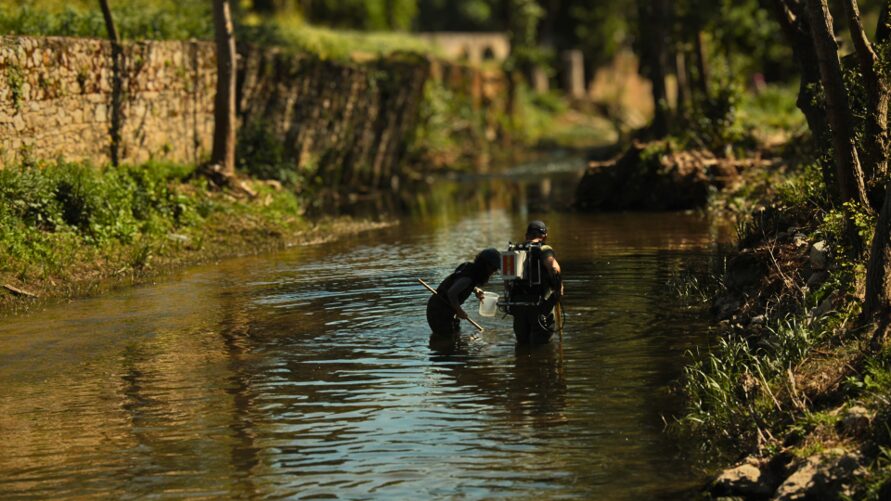
As mentioned earlier Ecos da Natureza also does monitoring to know how many of the endangered species live there. They achieve this by shocking the fish in the monitored area with a device that has two poles: one negatively and the other positively charged. It creates electric shocks, has different settings that can range from around three to five volts, based on the size of the fish, saltiness of the water and size of the area. This method is only used in nonsaline waters, such as rivers and lakes, as it can be very dangerous in salt water. Works by targeting the nervous system of the fish and periodically shocking it, for around fifteen seconds, which allows them to easily catch the fish without inflicting any permanent damage since the voltage is so low. The microorganisms in that area are not get negatively affected, as they don’t have a nervous system. It is used by starting at the end of the stream and going upstream to not shock the same fish twice, but accidental repeated shocking is still a possible issue.
An additional important step to take in protecting biodiversity and therefore to form a sustainable environment is to engage the local population in the actions that biologists would take and to educate the population about taking the right care for the environment. Since using force (even through implementing rules and laws) would often result in resistance.
Only with peoples cooperation, nature restoration, taking care of our surroundings and intervening when needed can we effectively achieve environmental sustainability. But it is also necessary to thoroughly research the methods used to make sure the actions taken don’t do more harm than good.
Overall, Ecos Da Natureza tries to use the best of their abilities in order to benefit the environment as much as possible. This is something that many have yet to do in Portugal but how can we be sure that there are no safer ways to achieve the same result ?