

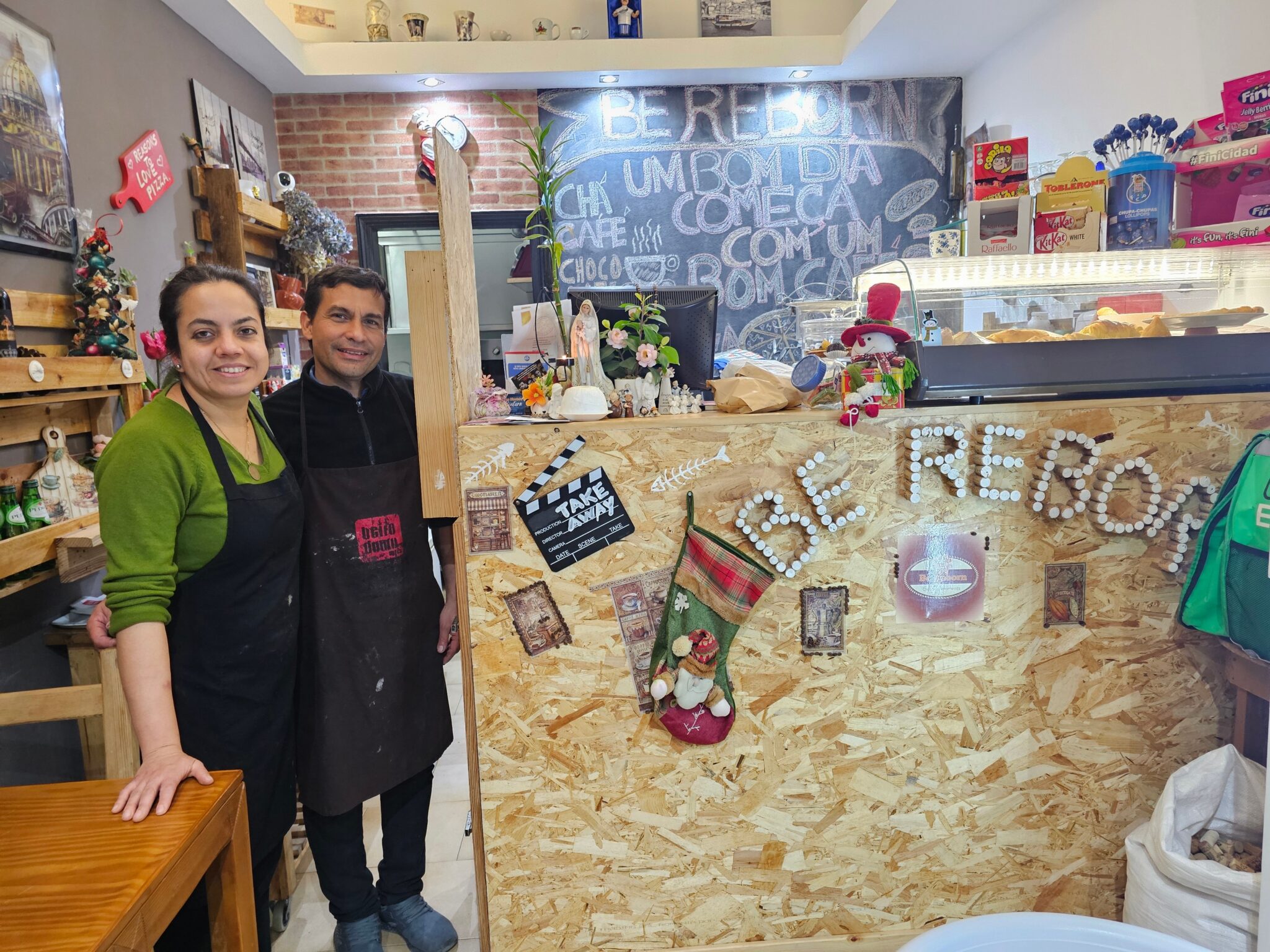
With a warm smile, Mariela de Sousa greets every customer who walks into her small shop, Be Reborn.
“Surprise bag?” she asks, noticing the customer’s phone and taking into account the time of day. She carefully selects slices of pizza, pastries, and arepas (bread made from corn, typical of South America), pairing them with croissants and other pastries, all looking irresistible. While selecting the items, Mariela proudly explains that she makes the dough and filling for all the pastries every day. What used to cost 9€ is now sold for 2.99€ through the Too Good To Go app. If there are leftovers that likely won’t sell, Mariela adds them to the baskets, keeping the price the same. “As I keep an eye on the time, I always add a little extra,” she explains. All this care has earned Be Reborn a 4.8 out of 5 rating from app users.
Surprise bags are reserved directly through the app. These include items made that same day or nearing their expiration date. As the name suggests, the contents are a surprise, depending on what has been sold throughout the day. On the app, you can pick up baked goods, sushi, meals, fruits, vegetables, groceries, and much more. Food can be picked up close to closing time, which varies depending on the type of establishment. At bakeries, for example, pickup is around 7 p.m., while at restaurants it may be at 11 p.m. or later.
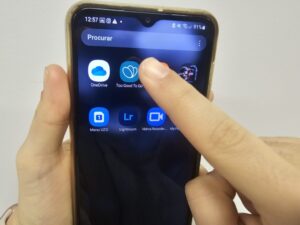
Founded in 2015 in Denmark, Too Good To Go was created with the goal of combating food waste in buffet-style restaurants. It currently operates in 18 countries across Europe, the Americas, and Australia, having become the world’s largest marketplace for saving surplus food. Over the course of a decade, it has attracted 170,000 partners and registered approximately 100 million users. In Portugal, it arrived in 2019 and, by 2023, already had more than 10,000 participating establishments and two million registered users.
Mariela, owner of Be Reborn for a year and a half, joined the Too Good To Go platform five months ago. Before that, because she didn’t like serving products from the previous day, she would offer the surplus to neighbors or anyone in need: “We lived near a shopping center, and there was a woman who needed help.” Now, she continues to help, but in a more sustainable way, by selling the surplus at affordable prices and reducing waste. “This way, people can buy at lower prices and the retailer doesn’t end up with the products,” she explains. This practice benefits both parties and helps reduce food waste.
According to the United Nations Framework Convention on Climate Change, food loss and waste account for 8 to 10% of annual global greenhouse gas emissions. One-third of the food produced worldwide is wasted (UNEP – 2021). In Portugal, each person discards, on average, 185 kg of food per year (National Institute of Statistics), placing the country third among the largest producers of food waste per capita in the European Union (Eurostat). Initiatives like Too Good To Go are essential to reversing this reality. In 10 years, the community has prevented the waste of over 330 million meals, reducing CO2 emissions equivalent to 154,849 airplane tickets worldwide (Myclimate, 2024 – cited on the Too Good To Go website). Each meal saved (1 kg of food) through Too Good To Go prevents 2.7 kg of CO2 emissions, corresponding to 2.8 m² of unnecessary land use per year and 810 liters of wasted water (Mérieux NutriSciences | Blonk, 2024 – cited on the Too Good To Go website).
International Day of Awareness on Food Loss and Waste, observed on September 30, highlighted in 2024 the importance of reducing food waste to combat climate change, achieve the Sustainable Development Goals, and address global food insecurity. Reducing food waste is one of the most effective actions to combat climate change, helping to limit global temperature rise to 2°C by 2100 (Project Drawdown, 2020 – cited on the Too Good To Go website). Additionally, it saves water, frees up land for other uses, reduces waste production, and lowers costs.
Businesses registered on the Too Good To Go platform have more than just an opportunity to monetize food surpluses and combat waste: they can also attract new customers. Mariela releases surprise bags almost daily and acknowledges that the app is also “a means of communication and advertising.” Some customers dine at Be Reborn and take the opportunity to pick up a surprise bag for the next day’s breakfast, while others discovered the establishment when they came to pick up their surprise bags, which has brought in new customers and benefits for the business.
A Venezuelan immigrant who has been living in Portugal for five years, Mariela describes her experience as a true rebirth—a sentiment reflected in the name of her business, Be Reborn. “When we emigrate, we embark on a new journey of discovery and learn to love the place where we are, as well as the people of the country that welcomed us and gave us a home,” she says. Today, she feels fulfilled, both by the success of her business and by the opportunity to contribute to the growth of the country she now calls home.
For Mariela, saving meals means more than just reducing waste: “Life has no meaning if we are not there for one another,” she concludes. Stories like hers show how small gestures in the fight against food waste can have major repercussions – environmental, social, and economic.

You must be logged in to post a comment.